
Scuba Diving in
Andaman & Nicobar Islands
- Why Andaman Is India’s Greatest Scuba Diving Destination
- Complete Guide to Every Scuba Diving Site in Andaman
- Scuba Diving in Havelock Island — Dive Sites in Detail
- Scuba Diving Costs in Andaman — Complete Price Guide
- PADI & SSI Diving Courses Available in Andaman
- Best Time for Scuba Diving in Andaman — Season Guide
- Scuba Diving for Beginners & Non-Swimmers
- Safety Rules, Age Limits & What to Know Before You Dive
- Money-Saving Tips for Andaman Diving
- Frequently Asked Questions About Scuba Diving in Andaman
- Why Book Diving Through Andaman TravelCare
- Your Scuba Diving Booking Checklist
- Conclusion
Why Andaman Is India’s Greatest Scuba Diving Destination
Fifteen metres underwater, a Napoleon wrasse the size of a door drifts past a wall of living staghorn coral. A school of barracuda circles silently overhead. The water is 29°C and so clear you can see 25 metres in every direction. This is an average Tuesday morning at Havelock Island, Andaman — and it explains why the islands have become India’s undisputed number one scuba diving destination.
The Andaman & Nicobar Islands sit at the convergence of the Bay of Bengal and the Andaman Sea, within one of the world’s richest marine biodiversity zones. The archipelago is home to over 200 species of hard coral, 600+ species of reef fish, 350+ species of molluscs, and 40+ species of sharks and rays. Underwater visibility regularly reaches 20–30 metres during peak season — conditions that rival the Maldives and Great Barrier Reef at a fraction of the cost. Discovery dives start from ₹2,500 and PADI Open Water certification runs ₹18,000–₹25,000, making Andaman one of the most affordable world-class dive destinations on earth.
The challenge isn’t whether Andaman delivers on scuba diving — it consistently outperforms expectations. The challenge is knowing which sites suit your experience level, which dive operators are actually PADI-certified, what you’ll genuinely pay, and how to structure your trip to make the most of limited underwater time. This guide answers all of it, drawn from years of coordinating dives across every major site in the archipelago.
Complete Guide to Every Scuba Diving Site in Andaman
Andaman has over 100 documented dive sites spread across the archipelago — but not all are suitable for every diver, and not all are easily accessible from the main tourist islands. Here is the authoritative breakdown of every major diving location, organised by island and experience level.
Havelock Island — Andaman’s Dive Capital
Havelock Island (officially Swaraj Dweep) is unquestionably the best base for scuba diving in the entire Andaman chain. The island has more certified dive centres, more diverse sites, better infrastructure, and consistently better underwater conditions than any other island. If you dive only one place in Andaman, make it Havelock.
Havelock’s most famous and frequently dived site. A gently sloping reef that descends from 5 to 25 metres, covered in table corals, sea fans, and soft corals. Resident species include reef sharks, lionfish, moray eels, and giant trevally. The topography is friendly for all levels.
One of Andaman’s premier sites for experienced divers. Known for strong currents that attract pelagic species — grey reef sharks, barracuda schools, eagle rays, and occasional hammerheads. The wall dive drops to 30+ metres with excellent visibility. Not for beginners.
Named for the massive, spiralling schools of chevron barracuda that congregate here — sometimes thousands in a single formation. A mid-water experience at 10–18 metres that is genuinely otherworldly. One of the most photographed dive sites in Asia.
Andaman TravelCare’s top recommendation for beginners and non-swimmers. Gradual slope, calm conditions, and abundant clownfish in their anemone homes make this the most approachable introduction dive on the island. Over 70% of first-time dives from our agency happen here.
A shallow reef system ideal for first-time divers and refresher dives. Dense coral coverage including brain corals, mushroom corals, and extensive soft coral formations. Regular sightings of octopus, nudibranch, and juvenile reef fish. Excellent underwater photography site.
A narrow underwater gorge cutting through the reef, creating a dramatic passage dive. Famous for resident green sea turtles, large schools of batfish, and moray eels. The gorge creates interesting topography for experienced divers. Best dived at slack tide.
A dramatic submerged pinnacle rising from 30 metres to around 8 metres beneath the surface. Strong currents bring nutrient-rich water that attracts impressive pelagic action — tuna, jacks, and sharks patrol the pinnacle. A bucket-list dive for advanced divers.
A wall dive with dramatic vertical coral formations descending into the blue. Known for large gorgonian sea fans, schooling anthias, and frequent white-tip reef shark sightings. Best dived in the morning when plankton blooms attract feeding reef fish.
Neil Island — Calm, Clear & Underrated
Neil Island (Shaheed Dweep) sits 37 km from Havelock and is significantly less trafficked by dive groups. This translates to less diver pressure on reefs, better chances of undisturbed marine life encounters, and a genuinely peaceful underwater experience. The diving here tends to be shallower and calmer — excellent for beginners and macro photography enthusiasts.
Neil’s most accessible dive site, directly off Bharatpur Beach. A shallow reef system (3–12 metres) with impressive hard coral coverage and exceptional clarity. Ideal for first-time divers and snorkelers upgrading to scuba. Regular octopus and cuttlefish sightings.
A gradual slope reef known for its extraordinary soft coral gardens. At dusk, the corals fully extend and the site transforms into a dense forest of colour. Best dived on a late afternoon dive for maximum coral polyp activity. Excellent for underwater wide-angle photography.
A submerged rock formation with interesting swim-throughs and crevices. Excellent for spotting cephalopods — octopus, cuttlefish, and squid gather here regularly. The rock attracts small cleaning stations where reef fish queue to have parasites removed by cleaner wrasse.
Port Blair Area — North Bay, Jolly Buoy & Beyond
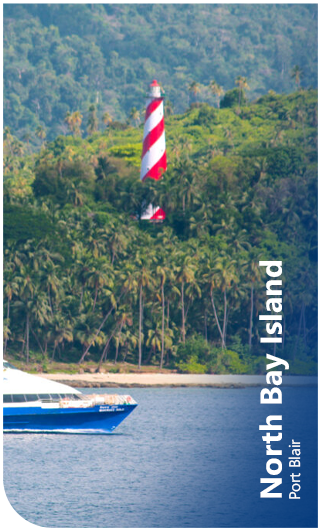
The most convenient dive site from Port Blair — just 20 minutes by speedboat. A coral garden reef at 5–15 metres with good coral coverage and a high density of reef fish. Also offers sea walking and snorkeling. Popular for day-trip diving from the city.
Part of the Mahatma Gandhi Marine National Park. One of the most pristine reef systems in South Andaman — completely untouched due to its protected status. Open November–May only. Exceptional coral coverage and fish diversity. Permit required via park authority.
Located inside the marine park, Wandoor offers a peaceful reef dive with good coral health. Less diver traffic than Havelock means better marine life behaviour. Accessible on day trips from Port Blair. Ideal for certified divers wanting a quieter alternative to the main tourist sites.
One of Andaman’s most spectacular dive areas — pristine reef systems with excellent visibility and dramatic topography. Known for encounters with dolphins, turtles, and large pelagics. Access requires special permits and is typically arranged as a full-day liveaboard or private charter trip.
Barren Island — India’s Only Active Volcano Dive
India’s only active volcano and one of the most extraordinary dive experiences in all of Asia. Unique volcanic formations, black lava flows colonised by coral, and exceptional pelagic action including hammerhead sharks, manta rays, and whale sharks in season. The island sits 140 km northeast of Port Blair and is reached by liveaboard. Lava fields create surreal underwater topography unlike any site in Andaman. Diving here is genuinely bucket-list — but requires advanced certification, liveaboard arrangements, and advance permits.
Diglipur in North Andaman is an emerging dive destination with largely unexplored reef systems and very low diver traffic. The reefs around Ross & Smith Island are in near-pristine condition. Expect excellent hard coral coverage, abundant turtle sightings, and the thrill of diving sites where very few divers have been before.
A submerged pinnacle off South Andaman with dramatic drop-offs and consistent pelagic action. Known for large schools of jack fish, grey reef sharks, and occasional whale shark sightings from November to April. Requires a full-day charter from Port Blair but the underwater scenery is exceptional.
Scuba Diving in Havelock Island — Why It’s in a Class of Its Own
Havelock Island is to Andaman diving what Koh Tao is to Thailand — the undisputed hub of a destination’s entire dive culture. The island has roughly a dozen certified dive centres, dozens of documented sites, and the infrastructure to handle everything from a nervous first-timer’s discovery dive to a multi-day PADI advanced course.
What Makes Havelock Diving Exceptional
The Reef Conditions
- Visibility: 20–30 metres in peak season
- Water temperature: 27–30°C year-round
- Coral health: among the best-preserved in India
- Currents: mild at beginner sites, stronger at advanced
- Depth range: 5 metres (beginner) to 30+ (advanced)
What You’ll Encounter
- Green and hawksbill sea turtles
- White-tip and grey reef sharks
- Giant manta rays (seasonal)
- Schools of barracuda (thousands)
- Napoleon wrasse, eagle rays, moray eels
- Nudibranchs, octopus, cuttlefish, seahorses
Priya & Rohan, Bangalore honeymoon couple, November 2024 — neither had dived before
Booked a discovery dive at Nemo Reef through Andaman TravelCare. Neither had swimming experience beyond basics. Instructor ratio: 1:1. Total underwater time: 28 minutes at 8 metres. Saw clownfish in anemones, a moray eel, and two green turtles. Rohan completed his PADI Open Water course the following day.
Their words: “We were terrified for the first two minutes and then we never wanted to come up.” — The most common post-dive comment we receive.
Scuba Diving Costs in Andaman — Complete Price Guide
Understanding exactly what you’ll pay before you arrive prevents the most common source of dive trip disappointment — unexpected costs adding up on-island. Here is a complete, transparent cost breakdown for every type of diving in Andaman.
Discovery & Introductory Dives — No Experience Required
| Dive Type | Depth | Duration | Cost Per Person | What’s Included |
|---|---|---|---|---|
| Discovery Dive | 5–10m | 20–30 min | ₹3,499 – ₹4,500 | Full equipment, instructor, brief orientation, 1:2 or 1:1 ratio |
| PADI Discover Scuba | 5–12m | 45–60 min total | ₹4,000 – ₹5,500 | Classroom briefing, pool session, guided ocean dive, equipment |
| 2-Dive Package | Up to 18m | 2 dives same day | ₹6,000 – ₹9,000 | Two guided dives, equipment, surface interval snacks |
| Night Dive | 10–18m | 45–60 min | ₹5,500 – ₹7,500 | Torch, equipment, night specialist guide, safety brief |
Certified Diver — Single & Fun Dives
| Option | Cost Per Dive | Notes |
|---|---|---|
| Single fun dive (own equipment) | ₹2,500 – ₹3,500 | You bring your gear; guide and boat included |
| Single fun dive (rental equipment) | ₹3,200 – ₹4,500 | Full equipment rental included |
| 5-dive package | ₹14,000 – ₹20,000 | Best per-dive value for certified divers staying 4+ days |
| 10-dive package | ₹24,000 – ₹35,000 | Recommended for PADI certification + fun dives combination |
| Advanced site dive (Mac Point, Barracuda City) | ₹4,000 – ₹6,000 | Premium sites with stronger currents; smaller groups |
| Barren Island liveaboard (2 days) | ₹18,000 – ₹28,000 | Full liveaboard with meals, 4–6 dives, equipment |
Vikram, certified diver from Chennai — 5 days at Havelock, October 2024
5-dive package (₹18,000) · PADI Advanced upgrade course (₹12,000) · Equipment rental top-ups (₹2,000) · Underwater GoPro video (₹1,500) · Tips to instructors (₹1,500)
Total diving spend: ₹35,000 over 5 days — covering 9 dives across 6 different sites including Mac Point and Barracuda City.
Per-dive average: ₹3,888. For reference, a similar 9-dive experience in the Maldives would cost ₹90,000+.
PADI & SSI Diving Courses Available in Andaman
Andaman is one of India’s best places to earn a scuba diving certification — not just because of the site quality, but because the island lifestyle creates the perfect setting for multi-day learning. You do classroom sessions in the morning, pool practice by late morning, and open water dives in the afternoon, with reefs that look nothing like a training environment.
Available Certifications — From Beginner to Instructor
| Course | Duration | Dives Required | Cost | What You Can Do After |
|---|---|---|---|---|
| PADI Discover Scuba | Half day | 1 ocean dive | ₹4,000 – ₹5,500 | Supervised diving only — not a certification |
| PADI Open Water | 3 days | 4 ocean dives | ₹18,000 – ₹25,000 | Dive independently to 18m worldwide |
| PADI Advanced Open Water | 2 days | 5 adventure dives | ₹12,000 – ₹16,000 | Dive to 30m; specialties include deep, navigation, night |
| PADI Rescue Diver | 3–4 days | 4+ rescue scenarios | ₹18,000 – ₹24,000 | Emergency diving response skills; prerequisite for Divemaster |
| PADI Divemaster | 4–6 weeks | 40+ logged dives | ₹60,000 – ₹90,000 | Lead and supervise dives professionally |
| SSI Open Water | 3 days | 4 ocean dives | ₹16,000 – ₹22,000 | Globally equivalent to PADI Open Water |
💡 Certification Tip: PADI and SSI certifications are globally interchangeable — both are recognised at dive centres worldwide. The choice between them depends on which certified centre you use at Havelock. All Andaman TravelCare partner dive centres are PADI or SSI certified; we will verify certification status on your behalf before booking.
📋 Pre-course Requirements: You must be able to swim 200 metres (or 300 metres with mask/fins/snorkel) and float for 10 minutes. Medical history form is required — disclose any heart conditions, respiratory issues, or ear problems before enrolling. Most healthy adults clear this with no issues.
Best Time for Scuba Diving in Andaman — Month-by-Month Guide
Andaman’s diving is governed primarily by sea conditions, not weather comfort. The same months that give you the best topside weather also deliver the clearest, calmest water and the best marine life activity. Here is the honest month-by-month breakdown.
| Month | Visibility | Sea Conditions | Marine Life Highlights | Rating |
|---|---|---|---|---|
| October | 15–25m | Calm, post-monsoon | Reef fish returning, corals re-energising | Excellent |
| November | 20–30m | Very calm | Peak diversity, manta ray season begins | Best Month |
| December | 25–30m | Calm, peak season | Whale sharks (occasional), mantas, full reef activity | Best Month |
| January | 25–30m | Excellent, calm | Maximum species diversity, best photography conditions | Best Month |
| February | 25–30m | Peak clarity | Best visibility of the year — year’s peak for photography | Best Month |
| March | 20–28m | Calm, warming | Manta ray season continues, excellent shark activity | Excellent |
| April | 18–25m | Calm, hot | Good conditions, fewer crowds at sites | Very Good |
| May | 12–20m | Pre-monsoon swells begin | Some sites may close as swell builds | Good |
| June–August | 5–10m | Monsoon — rough seas | Most dive sites closed or dangerous | Avoid |
| September | 8–15m | Transition — unpredictable | Some sites reopening, dive with local operator guidance | Caution |
⚠️ Monsoon Warning (June–August): During peak monsoon, underwater visibility drops to 5 metres or less, sea conditions become genuinely dangerous, and most legitimate dive operators close operations entirely. Discovery dives may still be sold by unlicensed operators — avoid these. If your travel dates fall in this window, postpone diving until October.
Scuba Diving for Beginners & Non-Swimmers in Andaman
The most persistent myth about scuba diving in Andaman is that you need to be a strong swimmer. You do not. Over 70% of the discovery dives coordinated by Andaman TravelCare involve non-swimmers or people who can swim only basic breaststroke. The equipment neutralises buoyancy entirely — the instructor controls your ascent, descent, and direction. You just breathe and look around.
What a First-Time Dive Actually Looks Like
- 8:30 AMArrive at dive centre. Sign medical form (5 min). Watch short video overview of hand signals and basic rules.
- 9:00 AMGround briefing with your instructor (20 min): breathing technique, equalising ears, hand signals, what to do if uncomfortable.
- 9:30 AMEquipment fitting: BCD, regulator, wetsuit, mask, fins. Weight belt calibrated to your body for neutral buoyancy.
- 9:45 AMBoat ride to site (10–20 minutes). Final briefing on the specific reef and what you’ll see.
- 10:10 AMEntry into water. First breath through regulator at surface. Instructor guides you down gradually — 1 metre, 2 metres, 5 metres. Equalise ears every metre (like clearing them on a plane).
- 10:15 AMUnderwater. You’re breathing. It sounds loud at first, then fades. The reef opens up. 20–35 minutes of guided underwater exploration.
- 10:50 AMControlled ascent. Safety stop at 5 metres for 3 minutes. Surface. Remove equipment on boat.
- 11:15 AMDebrief, photos/video if booked, certificate. Return to shore.
Best Sites for First-Time Divers
| Site | Location | Why It’s Ideal for Beginners | Recommended By |
|---|---|---|---|
| Nemo Reef | Havelock Island | Gradual slope, calm water, clownfish and easy marine life | Andaman TravelCare — primary recommendation |
| Tribe Gate | Havelock Island | Shallow, dense coral, no current, excellent visibility | Andaman TravelCare — second recommendation |
| North Bay Reef | Port Blair | Accessible from Port Blair, very calm, good for day trips | Good if no Havelock time in itinerary |
| Bharatpur Reef | Neil Island | Shore entry possible, extremely shallow, crystal clear | Best option on Neil Island |
💡 Non-Swimmer Confidence Tip: Inform your dive centre that you cannot swim confidently before booking. A good operator will assign a 1:1 instructor ratio (one instructor per one guest) and select a site specifically suited to your comfort level. This is standard practice at certified centres — never dive at a centre that dismisses this concern.
Safety Rules, Age Limits & Essential Things to Know Before You Dive
Age Limits for Scuba Diving in Andaman
| Age Range | Eligible For | Notes |
|---|---|---|
| 10–12 years | PADI Bubblemaker (2m depth) | Supervised pool experience only; parental consent required |
| 10–14 years | PADI Junior Open Water | Dive to 12m with certified adult; parental consent mandatory |
| 15+ years | Full PADI Open Water certification | No depth restrictions with appropriate certification |
| 18+ years | All courses including Divemaster | No additional requirements beyond medical clearance |
| 60–80 years | Discovery dives with medical clearance | Most healthy seniors are approved; disclose all conditions upfront |
Critical Safety Rules — Non-Negotiable
- Only dive with PADI-certified or SSI-certified instructors. Ask to see the certification card before your dive.
- Never dive within 24 hours of a flight. Decompression sickness risk is real — Andaman TravelCare strictly enforces this rule for all clients.
- Disclose all medical conditions honestly on the dive form. Heart conditions, epilepsy, respiratory issues, and recent ear surgery are critical disclosures.
- Do not consume alcohol for at least 12 hours before diving.
- Never touch, stand on, or collect coral or marine life. Environmental damage and legal penalties apply.
- Follow your instructor’s hand signals immediately. Never ignore a “surface” signal from your guide.
- Equalise your ears every metre of descent. If you feel pain, stop and signal your instructor — do not push through it.
🚩 Red Flags — Walk Away From Any Dive Operator Who: Cannot show a current PADI/SSI certification card on request. Puts more than 4 beginners per instructor underwater simultaneously. Dismisses your medical history questions. Offers a “same day” dive and flight without the mandatory 24-hour surface interval. Pressures you to continue when you signal discomfort.
Money-Saving Tips for Andaman Scuba Diving
6 Proven Ways to Reduce Your Diving Costs
-
1
Book Diving Directly at Havelock Island Dive Centres
Booking through hotel packages or online aggregators adds a 20–35% commission markup. Walking into a dive centre at Havelock and booking directly saves ₹800–₹1,500 per dive. Ask Andaman TravelCare for our partner centre contacts — we have pre-negotiated rates for our package guests.
-
2
Buy Multi-Dive Packages, Not Single Dives
The per-dive cost drops by 18–25% when you buy a 5-dive or 10-dive package upfront. If you’re staying 4+ days at Havelock, always buy a package on Day 1. A 5-dive package at ₹17,000 versus 5 individual dives at ₹4,000 each saves ₹3,000 immediately.
-
3
Travel October–November for Best Value
October and early November offer near-peak diving conditions (visibility 15–25m, calm seas) with pre-peak-season pricing. Flight costs are 20–30% lower than December–January. Dive package rates are also 10–15% lower. Best value diving window of the entire year.
-
4
Combine PADI Course with Fun Dives
If you’re planning to get certified, the dive centre will count your certification dives toward your total dive tally. Bundle your PADI Open Water (₹18,000–₹25,000) with 2–3 additional fun dives at a combined rate — you’ll pay 15–20% less than if you booked them separately.
-
5
Skip the Resort Dive Package — Book Independently
Resorts on Havelock frequently offer “dive add-on packages” that are convenient but overpriced. The resort takes a 25–40% commission from the dive operator. Book accommodation through Andaman TravelCare and diving directly with our partner centres — same quality, genuinely lower price.
-
6
Travel in Groups of 4+ for Shared Dive Boat Costs
Most dive operators reduce group rates by 10–15% for groups of 4 or more booking together. If travelling with friends or as a couple, coordinate dive timings — the boat cost is shared and the per-person rate drops. This is especially significant for advanced site dives (Mac Point, Barracuda City) that require private charters.
Frequently Asked Questions About Scuba Diving in Andaman
Why Book Your Diving Through Andaman TravelCare
You can walk up to any dive centre at Havelock and book independently. Many people do. But there are specific advantages to coordinating your diving through Andaman TravelCare that go beyond a simple referral.
| Criteria | Walk-In / Online Booking | Via Andaman TravelCare |
|---|---|---|
| Operator vetting | You verify certification yourself | We only work with PADI/SSI verified centres — pre-checked |
| Pricing | Posted rate (no negotiation) | Pre-negotiated rates for our package guests |
| Instructor ratio | Standard 1:2 or 1:4 | 1:1 for all non-swimmers guaranteed |
| Site selection | Centre decides based on conditions | We advocate for the right site for your experience level |
| 24-hour flight rule | Not always enforced | Strictly enforced — we build this into every itinerary |
| Underwater video | Available at extra cost | GoPro footage included in premium dive packages |
| Emergency contact | Dive centre only | Andaman TravelCare on-ground team reachable 24/7 |
An example of on-ground advantage — December 2024
A Mac Point dive was cancelled due to unexpected swell. An independent walk-in diver had the dive cancelled with no alternative. Andaman TravelCare guests were immediately redirected to Barracuda City — same experience level, different site, zero extra cost or logistics effort required from the guests. Local knowledge means having a backup plan before you need one.
Your Scuba Diving Booking Checklist
Before You Leave for Andaman
- Inform your doctor about your dive plans and get cleared if you have any cardiac, respiratory, or ear conditions
- Book your Havelock Island ferry tickets in advance — especially December–January when they sell out
- Confirm whether you want a discovery dive, fun dives, or a PADI course — this determines how many dive days to plan
- Download offline maps for Havelock Island — mobile signal is unreliable in parts of the island
- Pack a rash guard, reef-safe sunscreen SPF 50+, and motion sickness medication for ferry crossings
Day Before Your Dive
- Get 8+ hours of sleep — fatigue increases the risk of errors underwater
- Avoid alcohol completely for at least 12 hours before your dive
- Stay well hydrated — dehydration is a contributing factor to decompression sickness
- Confirm your dive time and meeting point with the operator
- Check the weather forecast — contact the dive centre if conditions seem rough
Morning of Your Dive
- Eat a light meal 1–2 hours before — not too full, not fasting
- Apply reef-safe sunscreen 30 minutes before entering the water
- Take seasickness medication if needed (Avomine) 1 hour before departure
- Arrive at the dive centre 15 minutes early for equipment fitting
- Complete your medical disclosure form honestly — disclose everything
After Your Final Dive — Critical Rules
- Wait minimum 24 hours before any flight after your last dive — non-negotiable
- Avoid strenuous exercise for 4–6 hours after diving
- Avoid alcohol for at least 4 hours after diving
- If you experience joint pain, skin rash, or breathing difficulty after diving — seek medical attention immediately (these are decompression sickness signs)
- Download and save your dive log/certification before leaving Havelock
Plan Your Andaman Scuba Diving Trip Today
Andaman TravelCare coordinates diving across all major sites in the Andaman Islands — from first-time discovery dives at Nemo Reef to advanced liveaboards to Barren Island. We handle ferry bookings, hotel arrangements, dive centre coordination, and on-ground support throughout your trip.
Tell us your dates, origin city, and experience level — personalised dive itinerary and pricing within 2 hours. No obligation, no generic packages.
Experience the magic of Andaman with our easy, fun tour packages. Jump into clear waters, stroll historic sites, and make memories that last!
Deep Sea Diving in Andaman
Deep sea diving in Andaman is a super exciting adventure for people who love exploring underwater. It’s like going really deep down in the ocean to see special sea creatures and landscapes.
But it’s important to know that deep sea diving needs special training and gear because it’s more risky. Before you try deep sea diving in Andaman, make sure you get proper training and certification from a good dive center.
With the right training and help, deep sea diving can be a really fun and unforgettable experience in Andaman’s waters. With the right training and help, deep sea diving can be a really fun and unforgettable experience in Andaman’s waters.
Age Limit To Scuba Dive in Andaman
If you’re wondering about the age limit for scuba diving in Andaman, it typically ranges from 10 to 80 years old. However, it can vary depending on the dive center and the specific diving program you choose.
Some dive centers may have different age restrictions or require parental consent for younger divers. It’s essential to check with the dive center beforehand to ensure that you meet their age requirements and that everyone stays safe during the dive.
Sightseeing In Andaman


Andaman Scuba Diving Course
For those interested in scuba diving, various courses are available in Andaman, ranging from introductory programs like PADI Discover Scuba Dive to advanced courses. These courses typically cover theoretical instruction, confined water practice, and guided open-water dives.
Water sports Activities in Andaman

Water Activities In Andaman
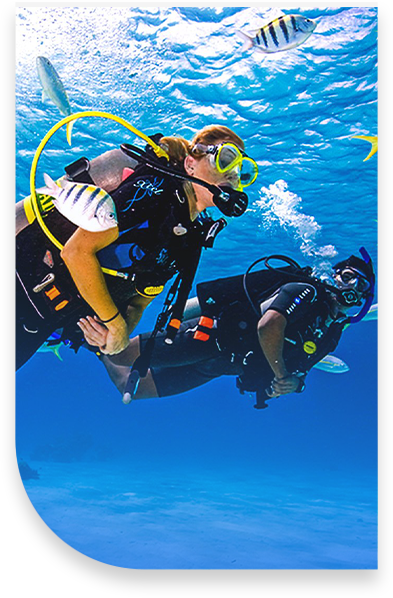
SCUBA
₹3499 per person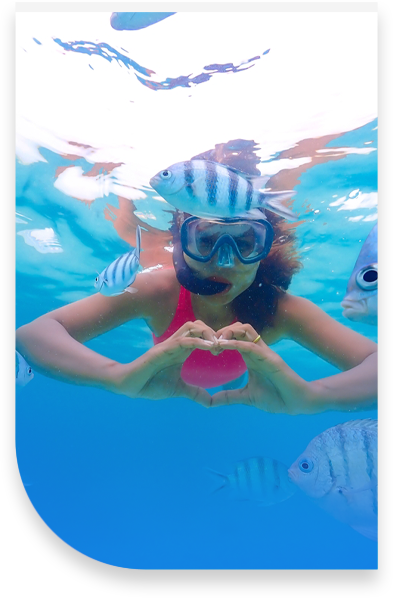
SNORKELING
₹1199 per person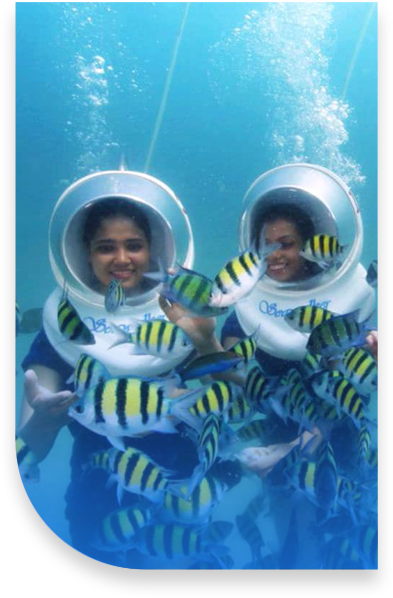
SEAWALIK
₹3499 per person
PARASAILING
₹2999 per person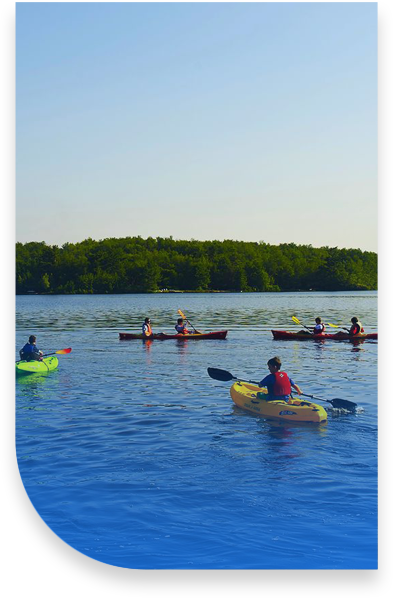
KAYAKING
₹3499 per personJETSKI
₹599 per personThings to Remember
- Always dive with a certified instructor or guide.
- Follow safety procedures and guidelines provided by your dive center.
- Respect the marine environment and avoid touching or disturbing coral reefs and marine life.
- Enjoy your diving experience and take in the beauty of the underwater world!
Conclusion: Andaman’s Underwater World Is Waiting
There is a specific moment that almost every first-time diver in Andaman describes in the same way. The moment when you stop thinking about the equipment, the breathing, the depth — and you just look. A sea turtle glides past at arm’s length, completely unhurried. A school of batfish parts around you like a living curtain. The coral is every colour that exists and a few that don’t seem to.
Whether you’re a nervous first-timer convinced you can’t swim well enough, a certified diver who’s been waiting for the right conditions, or an experienced diver hunting hammerheads at Barren Island’s volcanic reefs — Andaman has a dive for you.
The formula is simple: fly to Port Blair between October and May, spend at least 4 days on Havelock Island, dive with a PADI-certified centre that operates at 1:2 ratios or better, and never schedule a dive on the day before your flight home.
FAQs
The best time for scuba diving in Andaman is during the dry season, from October to May, when the weather is pleasant, and the water conditions are optimal.
Scuba diving costs in Andaman vary depending on factors like dive location and package. Prices typically range from ₹2,500 to ₹6,000 per dive.
Havelock Island, Neil Island, and North Bay Island are among the best scuba diving sites in Andaman, offering diverse marine life and beautiful underwater landscapes.
The cost of scuba diving in Havelock Island usually ranges from ₹3,000 to ₹5,000 per dive, depending on the dive center and package selected.
Scuba diving in Andaman is generally safe when conducted with certified instructors and following safety guidelines. However, it’s essential to disclose any medical conditions before diving.
Non-swimmers can participate in scuba diving in Andaman with proper training and supervision from experienced instructors. However, it’s crucial to inform the dive center about swimming abilities beforehand.
It’s recommended to wear a swimsuit or lightweight clothing for scuba diving in Andaman. Avoid wearing heavy clothing like jeans, as they can restrict movement underwater.
To prepare for scuba diving, ensure you’re well-rested, hydrated, and have eaten a light meal at least an hour before diving. Avoid consuming alcohol before diving.
Yes, Absolutely. As a local Travel agency that coordinates hundreds of dives a year, we can confirm that over 70% of our honeymoon couples are non-swimmers.
- Our Expert Recommendation: While Port Blair offers diving, for the most romantic and clear experience, we exclusively recommend Nemo Reef in Havelock or Tribe Gate. These spots have a gradual slope, making them perfect for beginners.
- The “Local” Advantage: We only partner with PADI or SSI certified dive centers that maintain a 1:1 ratio (one instructor for every one guest).
- Safety Insight: Never book a dive on the same day as your flight. At Andaman TravelCare, we strictly enforce a 24-hour surface interval between your last dive and your flight departure to prevent decompression sickness.
- Trust Tip: We provide our clients with underwater GoPro photos and videos included in our premium packages, so you don’t have to worry about capturing the moment yourself.